
RESTAURANTS · HOTELS · HOSPITALITY
Commercial upholstery. Made for your space.
New upholstered seating for restaurants, hotels and hospitality interiors.
Plan custom booth and banquette upholstery, built-in seating and upholstered panels with clear dimensions, materials and finish specifications.
Discuss your upholstery project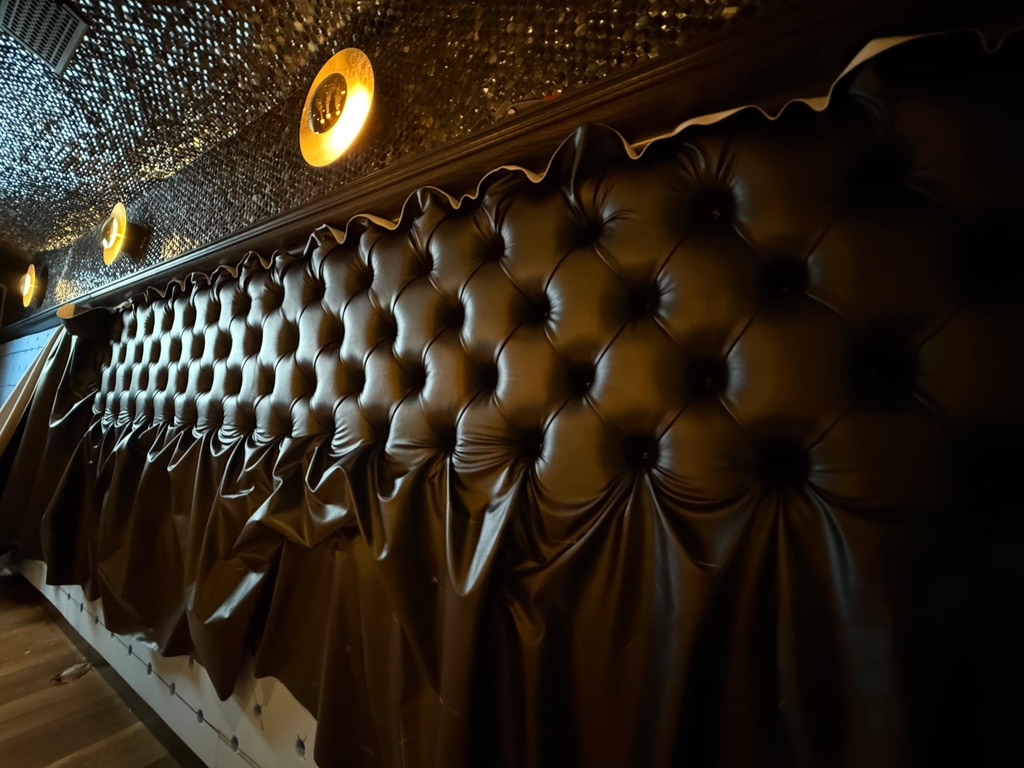
Upholstery vs. reupholstery.
Upholstery is the covering, padding and related work that finishes furniture. Reupholstery renews that work on furniture you already own. Commercial upholstery can describe both services; here, we separate new projects from renewal so you can choose the right scope.
New upholstery
Start with a new design or an unfinished frame. Specify the dimensions, cushioning, material and finish before fabrication.
Explore new commercial upholsteryReupholstery
Start with existing furniture. Assess the covers, foam and structure, then agree what will be retained, repaired or renewed.
Explore commercial reupholsteryFrom a design to a finished seat.
For a new project, upholstery decisions belong in the design stage. Seat depth, back height, cushion support and seam placement work together with the frame and selected material. Agree the complete specification before production.
- Restaurant booths and custom banquette seating
- Built-in benches and hospitality lounge seating
- Upholstered wall panels and project-specific padded elements
Contract upholstery for hospitality interiors.
Designers and purchasing teams often use “contract upholstery” or “hospitality upholstery” for commercial projects. The project brief should identify intended use, cleaning needs, quantities and any required material documentation. A commercial label alone does not confirm suitability for every application.
Choose the material before approving the finish.
Compare fabric, vinyl and leather through physical samples and product specifications. Discuss color, pattern direction, seams and cleaning requirements. If you plan to supply COM—customer’s own material—confirm suitability, required yardage, usable width and delivery arrangements before ordering.
A specification the workshop can build from.
Send drawings or dimensions, quantities, reference images and your location. Identify who supplies the frames, whether panels need templates and which installation details require coordination. The estimate should distinguish fabrication, upholstery, delivery and installation.
Questions from hospitality projects.
How is new upholstery different from reupholstery?
New upholstery finishes a new design or unfinished frame. Reupholstery replaces or renews upholstery on existing furniture. Both involve material and padding decisions, but existing furniture also needs a condition assessment.
Can you work with a designer’s drawings?
Share the drawings, dimensions and finish schedule for review. Construction details, tolerances, material selection and the scope of work must be agreed before production.
Can I supply my own fabric?
Request a COM review before purchasing or shipping material. Confirm suitability, yardage, pattern repeats and any required documentation with the project team.
What affects commercial upholstery pricing?
Quantity, dimensions, shape, tufting, seams, cushion construction and material choice affect the scope. Frame fabrication, freight and installation should be identified separately in the estimate.
How long does a hospitality upholstery project take?
Timing depends on the approved design, material availability, quantity and production schedule. Provide your opening or installation date and confirm the project timeline before making site arrangements.
Explore the work and materials.
Start with your design.
Send drawings, quantities, material preferences, location and target date. We’ll review the scope and next steps.
Discuss your upholstery project