
Targeted repair
For isolated upholstery damage. Check material matching and the surrounding wear before deciding.
CINEMAS · THEATERS · AUDITORIUMS
Keep the seating that works. Renew the upholstery that doesn’t.
Worn covers, tired cushions or a new interior palette? Start with a seating assessment and a clear scope for your venue.
Request a seating assessment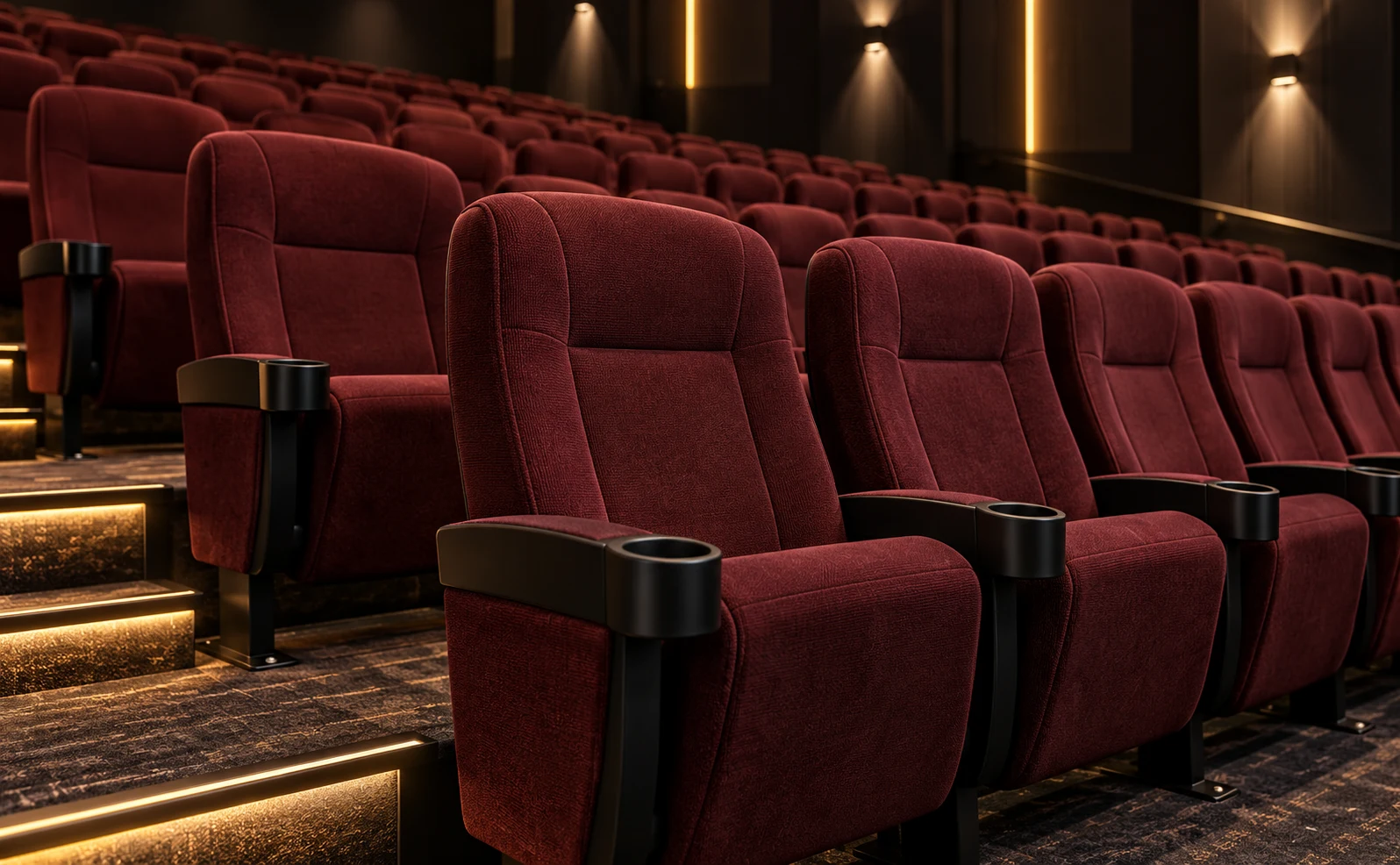
Start with the condition of the existing seats—not just the appearance of the fabric. Review the covers, cushions, frames and moving parts before choosing the work.
The same seat count can produce very different scopes. Request a written estimate that identifies what is included.
See the color in your room, feel a physical sample and review the cleaning instructions. Discuss the venue’s material and seat-assembly requirements before approving the finish.
Explore upholstery materials / Review seating careA useful estimate starts with the seat model, quantity, condition and material selection. Seat and back covers, foam renewal, disassembly, transport and reinstallation can each affect the total. Send photos and a seat count to request a project-specific assessment; a generic price per seat cannot capture those differences.
Recovering is worth evaluating when the seating structure and layout still work for the venue. Compare the full refurbishment scope with replacement, including removal, freight and installation. Damaged structures, unavailable parts or a layout that no longer meets your needs may favor replacement.
Foam condition should be assessed separately from the cover. Flattened or damaged padding can require renewal even when the upholstery looks repairable. Include photos of the cushions and describe any loss of comfort in your request.
Compare materials for abrasion, cleaning, texture and the requirements of your venue. Ask for physical samples and manufacturer documentation. A fabric rating alone does not establish compliance of the complete seat assembly; confirm applicable requirements with the venue and responsible project team.
A limited repair may fit isolated damage. Matching an older fabric can be difficult because of fading, wear and discontinued materials. Compare a targeted repair with recovering a complete row or section for a consistent appearance.
Provide the event calendar, available work windows and the sections that can be taken out of service. Phased work may be an option, subject to the seat design, access and agreed scope. Confirm the schedule before booking closure dates.
Timing depends on quantity, material availability, condition and whether upholstered components can be removed for workshop work. Include your required completion date with the assessment request. Production and site work need a confirmed project schedule.
Upholstery and mechanical repairs are different scopes. Share the manufacturer, model and the fault you are seeing. Mechanical or electrical work, replacement parts and compatibility must be confirmed separately; recovering a seat does not repair a failed mechanism.
Send the venue location, seat and row counts, manufacturer or model if known, wide room photos and close-ups of damaged covers and cushions. Include access restrictions, your preferred material and your target date. A sample seat or site assessment may be needed before the final scope is agreed.
Send your seat count, venue location, photos and target date. We’ll review the request and confirm the next step and service scope.
Request a seating assessment