
Customer's Own Material: A Commercial Upholstery Checklist
Before buying fabric for restaurant booths or hotel furniture, confirm what the project actually requires.
Customer's Own Material, often shortened to COM, means the customer supplies the upholstery material for the project. US Booths accepts customer-supplied material for review. That does not mean every textile is suitable for every frame, seam or cleaning routine. Agree on the specification and quantity before placing an order.
1. Identify the exact material
Send the manufacturer, collection, pattern, color code and specification sheet. Include a physical sample when requested. A photo or a color name alone cannot identify the product, its backing or its care requirements. Note whether seats and backs use the same material.
2. Confirm direction and pattern repeat
Ask which direction the pattern should run on the finished furniture. Railroaded material is oriented across the roll; other patterns run along it. Horizontal and vertical repeats, stripes and matching between adjacent pieces affect cutting decisions. Do not assume rotating the fabric produces an acceptable result.
Manufacturer product specifications help make these differences visible. For example, Charlotte Fabrics lists the pattern direction and repeat separately on its CB600-115 specification page. Use the sheet for your own selected material rather than borrowing the requirements of that example.
3. Get yardage for the actual furniture
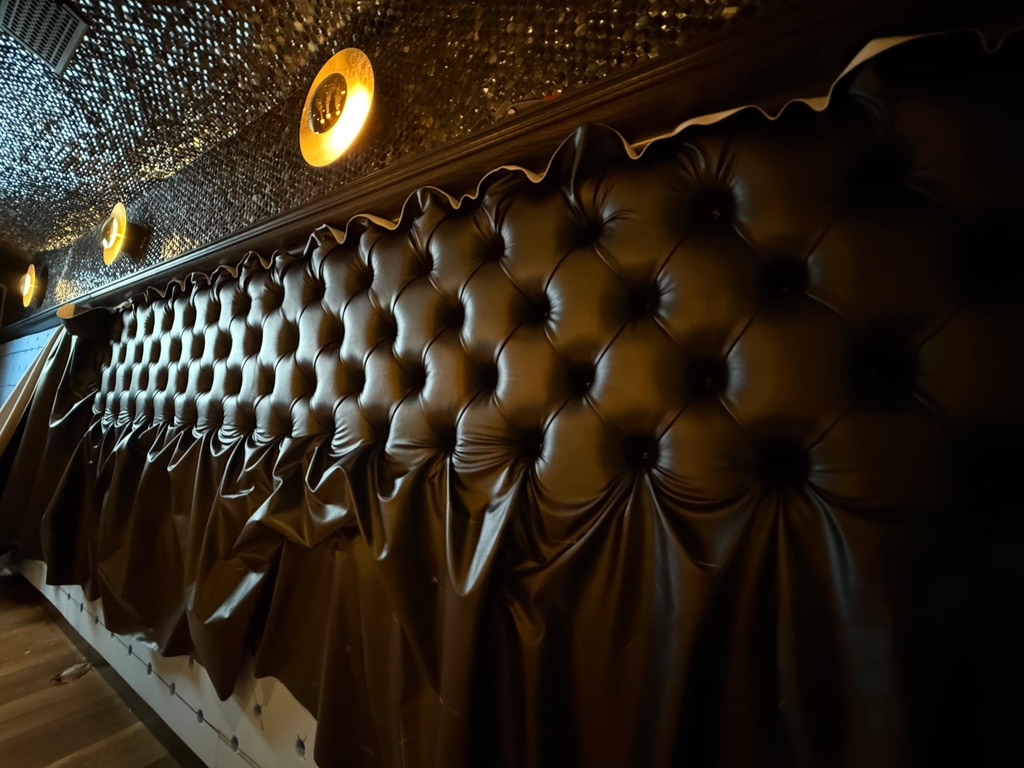
Provide quantities, dimensions, photos and the proposed upholstery design. A plain cover and a deeply tufted back use material differently. Confirm fabric width, repeat, direction and whether pattern matching is expected before the team specifies yardage.
Do not purchase against a generic per-chair allowance. Ask for the quantity in writing and confirm any allowance for cutting, matching or repairs. If the furniture changes after the estimate, revisit the amount before shipping.
4. Match the specification to daily use
Describe how staff clean the furniture and where it will be used. Share any required performance documentation with the team before approval. Cleaning instructions vary by product: a cleaner used successfully on one material may be unsuitable for another. Keep the manufacturer's care sheet with the property or restaurant's maintenance records.
5. Coordinate shipment before sending it
Confirm the receiving address, project reference, expected quantity and delivery date with the project team. Identify each roll by its intended use. Retain the supplier's reference and report shortages or substitutions before work begins. Agree on how remaining material will be handled in the project scope.
A fabric shipment does not by itself confirm a production slot. Coordinate material arrival and the agreed furniture schedule together; do not plan a closure or reopening around an unconfirmed delivery.
Send a complete COM request
- Furniture photos, quantities and dimensions.
- Manufacturer, pattern, color code and specification sheet.
- Preferred pattern direction and any matching requirement.
- Project ZIP code, target date and access details.
- Whether material has been ordered and its expected arrival date.
Review our booth and banquette upholstery service or hotel furniture reupholstery for the furniture scope. Still selecting a textile? Explore the materials catalog. Have your customer-supplied fabric reviewed before ordering.